Financial Anxiety: How to Feel in Control Again When Money Feels Scary
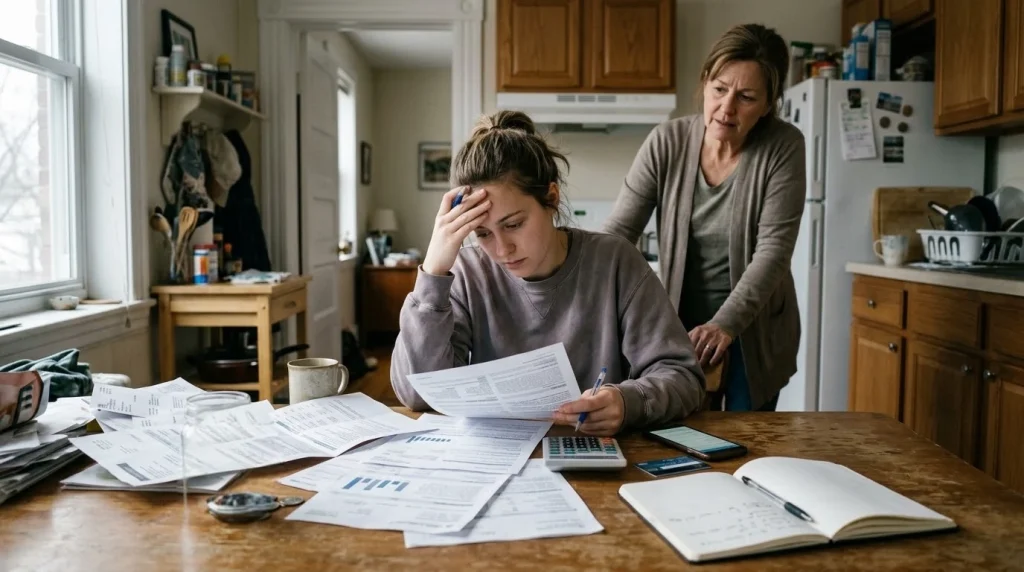
Money problems do not always stay on the spreadsheet. Sometimes they follow you into bed, into conversations, into work, and into the quiet moments when you are supposed to be relaxing.
You may know exactly how much you earn and still feel afraid to check your bank account. You may have a budget and still worry that one unexpected bill will undo everything. Or you may keep thinking about money even when nothing urgent is happening.
That feeling has a name: financial anxiety.
Financial anxiety does not mean you are bad with money. It can be a response to debt, unstable income, rising expenses, past financial mistakes, uncertainty, or simply the feeling that you do not have enough control over what happens next. The American Psychological Association has noted that money is a major source of stress and that avoiding financial problems can create more problems and anxiety over time.
The good news is that you do not need to solve your entire financial life today. The goal is to replace vague fear with clear information and small actions you can actually control.
What Financial Anxiety Can Feel Like
Financial anxiety can look different from person to person. For some people, it means constantly checking account balances. For others, it means avoiding bank statements, unopened bills, credit-card accounts, or conversations about money.
Common signs can include:
- Worrying repeatedly about running out of money
- Avoiding your bank account because you are afraid of what you will see
- Feeling guilty or ashamed about debt or spending
- Having trouble concentrating because money thoughts keep returning
- Feeling nervous whenever an unexpected expense appears
- Comparing your financial life with other people’s lives
- Making impulsive money decisions when you feel overwhelmed
The important point is that anxiety can make financial decisions harder. Research discussed by the American Psychological Association describes how financial insecurity and perceptions of scarcity can increase stress and make complex thinking more difficult.
Why Money Can Feel So Scary
Money represents more than numbers. For many people, it represents housing, food, family responsibilities, independence, security, and the ability to handle emergencies.
That is why a small financial problem can sometimes feel much larger emotionally. Your brain may not be thinking only about today’s bill. It may be jumping ahead to questions like, “What if I lose my income?” “What if I cannot pay my debt?” or “What if something goes wrong and I have no backup?”
Past experiences can also shape your relationship with money. Growing up in a household where money was constantly tight, experiencing job loss, carrying significant debt, or going through a major financial setback can make future uncertainty feel especially threatening.
Understanding this does not mean ignoring the numbers. It means separating the financial problem from the fear surrounding the problem.
Step 1: Stop Trying to Solve Everything at Once
When money feels scary, your first instinct may be to fix everything immediately. Pay every debt. Cut every expense. Save more. Earn more. Invest more.
That approach can create even more pressure.
Instead, choose one financial question that needs an answer today.
For example:
- How much money do I have available right now?
- Which bills must be paid before my next income arrives?
- What is my minimum monthly cost of living?
- Which debt requires my attention first?
- How much can I realistically save this month?
One clear answer is more useful than twenty frightening possibilities.
Step 2: Look at the Numbers Without Judging Yourself
Avoiding your finances may provide temporary relief, but it usually leaves the underlying uncertainty untouched. The Consumer Financial Protection Bureau recommends looking at actual spending and building a budget based on what you really spend, rather than what you think you should be spending.
Start with four numbers:
- Money available: What is currently in your checking, savings, and other accessible accounts?
- Income: How much money is reasonably expected to come in?
- Essential expenses: What must be paid for housing, food, utilities, transportation, insurance, and other necessities?
- Debt obligations: What minimum payments and other required payments are coming due?
Do not use this exercise to criticize yourself. You are collecting information.
Knowing the truth may feel uncomfortable at first, but uncertainty often becomes easier to manage when you can see exactly what you are dealing with.
Step 3: Build a Simple “Money Control” List
Financial anxiety often grows when everything feels outside your control. A useful response is to divide your situation into two groups.
Things I can control:
- What I spend
- Which subscriptions I keep
- How often I review my accounts
- Whether I make a savings contribution
- Whether I contact a creditor before missing a payment
- Whether I look for ways to increase income
Things I cannot control completely:
- The economy
- Interest-rate changes
- Unexpected repairs
- Other people’s spending or income
- Market movements
- Every future expense
Your job is not to control everything. It is to make better decisions about the part you can influence.
Step 4: Create a Small Emergency Buffer
An emergency fund is not about reaching some magical number overnight. It is about creating a financial cushion for expenses you did not plan for.
The Consumer Financial Protection Bureau explains that even a small amount of emergency savings can provide some financial security and help people handle unexpected expenses without immediately relying on credit or loans.
If you currently have little or no emergency savings, start with an amount that fits your actual situation. The first goal can simply be to establish the habit of setting money aside.
FinanceClif’s guide to building an emergency fund can help you think through a practical target.
Step 5: Give Your Money a Job
A pile of money in one account can feel confusing. Giving your money specific jobs can make your financial situation easier to understand.
You might separate your plan into:
- Essential bills
- Everyday spending
- Emergency savings
- Short-term goals
- Debt repayment
- Long-term investing
This does not require multiple bank accounts. Even a simple written plan can help.
The purpose is not to create a perfect budget. The purpose is to know what your money is supposed to do before it disappears.
Step 6: Deal With Debt Without Letting Shame Take Over
Debt can make financial anxiety much louder because every month brings another obligation.
If debt is part of your situation, start by listing each balance, interest rate, minimum payment, and due date. Then choose a repayment strategy you can realistically maintain.
Do not confuse shame with responsibility. You can take responsibility for a financial mistake without spending the rest of your life punishing yourself for it.
If credit-card debt is a major source of pressure, FinanceClif’s credit-card debt payoff guide can help you organize the next steps.
Step 7: Stop Using Other People’s Lives as Your Financial Measuring Stick
One of the easiest ways to increase financial anxiety is to constantly compare your life with someone else’s.
You see the house. The car. The vacation. The business. The investment portfolio.
You do not see the full balance sheet.
You may not know their debt, family support, income, expenses, inheritance, business losses, or financial history.
Your useful comparison is usually with your own previous position.
Are you spending with more intention? Are you understanding your finances better? Are you reducing expensive debt? Are you building some savings? Are you making decisions based on your goals rather than panic?
Those are measurable forms of progress.
Step 8: Create a Weekly Money Check-In
Instead of thinking about money every hour, create a specific time to review it.
Once a week, spend 15 to 30 minutes checking:
- Your account balances
- Upcoming bills
- Recent spending
- Debt payments
- Savings progress
- Any financial decision that needs attention
Then stop.
You do not need to monitor your finances constantly to be responsible with money. A regular system can give you information without allowing money to occupy every part of your day.
What If You Are Already Behind?
If you are struggling to pay bills, do not wait until the situation becomes impossible before communicating.
The Consumer Financial Protection Bureau recommends contacting lenders and companies when your financial circumstances change and asking what options may be available. Depending on the situation, a company may offer different payment arrangements or other assistance.
Make a list of your essential bills first. Protect housing, basic utilities, food, transportation needed for work, insurance, and other essential obligations according to your circumstances. Then work through the remaining bills and debts systematically.
If the situation is severe, consider getting help from a qualified financial counselor or other appropriate professional rather than trying to solve everything alone.
When Financial Anxiety Needs More Than a Budget
A budget can help organize money, but financial anxiety is not always purely a budgeting problem.
If money worries are seriously affecting your sleep, relationships, work, daily functioning, or ability to make decisions, consider talking with a qualified mental-health professional. The American Psychological Association notes that psychologists can help people work through distress and change difficult patterns of behavior.
Getting support does not mean you have failed financially. Sometimes the most practical financial decision is recognizing when you need another person to help you work through the emotional side of the problem.
A Simple 24-Hour Reset
If money feels overwhelming today, do not try to rebuild your entire financial life tonight.
Instead:
- Take a break from financial news and social media.
- Write down how much money is currently available.
- List the bills that must be handled next.
- Identify one unnecessary expense you can pause or review.
- Choose one financial action for tomorrow.
That is enough for one day.
Final Thought: Control Comes From Clarity
You may not be able to control your income, the economy, unexpected expenses, or everything that happens in the future.
But you can control whether you look at the numbers.
You can control whether you make a plan.
You can control whether you ask for help.
You can control the next financial decision.
Financial confidence does not mean never feeling worried about money. It means knowing what to do when the worry appears.
Start small. Face the numbers. Give your money a job. Build whatever cushion your circumstances allow. And take the next useful step instead of trying to solve your entire financial future at once.
Frequently Asked Questions
What is financial anxiety?
Financial anxiety is persistent worry, fear, or stress connected to money and financial uncertainty. It can be caused by real financial pressure, past experiences, or a combination of financial and emotional factors.
How can I reduce financial anxiety quickly?
Start by replacing uncertainty with information. Check your available money, upcoming bills, essential expenses, and debt obligations. Then choose one practical action instead of trying to fix everything at once.
Can budgeting reduce financial anxiety?
A realistic budget can reduce uncertainty by showing what money is coming in, where it is going, and what needs attention. It cannot remove every financial problem, but it can make decisions more visible and manageable.
How much should I have in an emergency fund?
There is no single amount that works for everyone. Your target depends on income stability, essential expenses, debt, household responsibilities, and access to other resources. The Consumer Financial Protection Bureau recommends starting with what you can realistically set aside and building from there.
Should I get professional help for financial anxiety?
If financial worry is interfering with your daily life, relationships, sleep, or ability to function, professional support may be appropriate. A qualified financial professional can help with financial planning, while a mental-health professional can help with anxiety and emotional distress.
Sources
- American Psychological Association: Face the Numbers
- American Psychological Association: Psychology of Spending
- Consumer Financial Protection Bureau: Emergency Fund Guide
- Consumer Financial Protection Bureau: Financial Preparedness and Security
- Consumer Financial Protection Bureau: Unexpected Job Loss
Educational disclaimer: This article provides general financial and wellness information for educational purposes. It is not individualized financial, medical, or mental-health advice. Your situation may require advice from a qualified professional.

About Bethel Felix
I help readers navigate personal finance, smart investing, and wealth creation with simple, actionable advice to build a stronger financial future and achieve financial independence.
View all posts by Bethel Felix